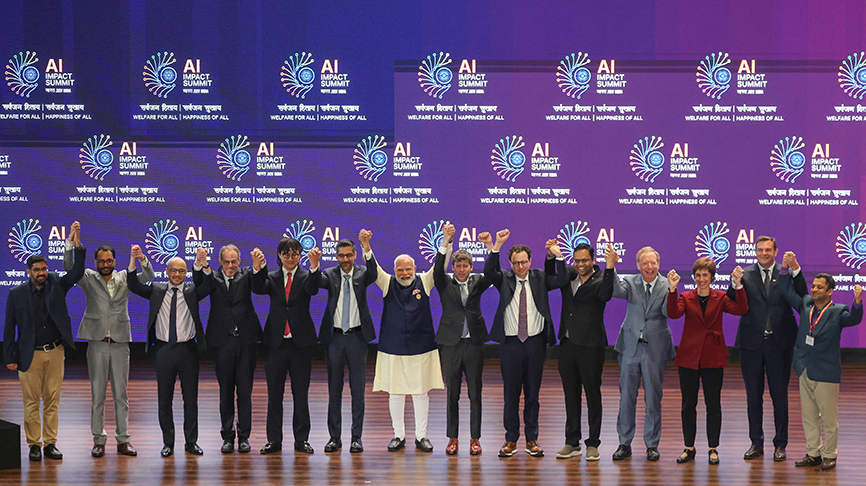
India AI Impact Summit 2026: A Global Success With Strategic Gaps in AI Governance
The India AI Impact Summit 2026, held from February 16 to 20 in New Delhi, marked a major milestone in global artificial intelligence diplomacy. As one of the largest AI-focused gatherings hosted in the Global South, the summit brought together heads of state, ministers, technology leaders, research institutions, and industry experts to discuss the future of artificial intelligence development and governance.
The event reinforced India’s ambition to position itself as a central player in shaping global AI policy, innovation, and inclusive technological growth. While widely regarded as a successful diplomatic and economic platform, strategic observers noted that certain policy discussions received limited attention.
A Landmark Event for the Global South
The India AI Impact Summit 2026 was the fourth major AI summit in an international series following earlier meetings in Europe and East Asia. Hosting the summit in New Delhi signaled a shift toward broader global participation in AI governance discussions, particularly giving stronger representation to developing and emerging economies.
Leaders from more than 100 countries reportedly attended the summit, including dozens of government ministers and high-level officials. The scale of participation highlighted the increasing geopolitical importance of artificial intelligence.
Key Themes: People, Planet, and Progress
The summit was structured around three central themes: People, Planet, and Progress. Discussions focused on how artificial intelligence can drive economic development, enhance social inclusion, and address sustainability challenges.
Panels and keynote sessions explored AI applications in healthcare, agriculture, education, smart infrastructure, and public governance. A large technology expo accompanied the summit, showcasing AI startups, enterprise platforms, robotics systems, and research innovations.
Economic and Innovation Highlights
One of the major strengths of the summit was its strong emphasis on AI adoption and implementation. Several international companies and technology firms announced investment plans and research collaborations aimed at expanding AI infrastructure in India and beyond.
India’s growing AI startup ecosystem was prominently featured, demonstrating progress in machine learning, data science, robotics automation, and digital services. The summit positioned India as an emerging AI innovation hub with increasing global influence.
Policy and Governance Discussions
While economic cooperation and technological advancement were key highlights, some analysts observed that detailed governance frameworks were less developed in the summit’s final outcomes. Discussions around AI safety standards, global regulatory alignment, data rights, and enforcement mechanisms were present but did not translate into binding agreements.
Observers suggested that the summit leaned more toward innovation-driven dialogue rather than regulatory frameworks. The emphasis appeared to prioritize growth, accessibility, and technological deployment over strict policy enforcement structures.
The Delhi Declaration
The summit concluded with the signing of the Delhi Declaration, a joint statement emphasizing responsible AI development, ethical principles, and democratic access to technology. While not legally binding, the declaration expressed a shared intent among participating nations to promote inclusive and human-centered AI.
The declaration highlighted the importance of equitable access, sustainable AI development, and international collaboration. However, it stopped short of introducing mandatory compliance mechanisms or formal global regulatory commitments.
Strategic Significance
Despite debates about policy omissions, the summit achieved several strategic goals. It elevated India’s diplomatic presence in AI discussions, expanded cross-border collaboration, and reinforced the importance of AI for economic transformation.
By hosting a large-scale global summit, India demonstrated its readiness to contribute actively to shaping the future of artificial intelligence, particularly from the perspective of developing economies.
Balancing Innovation and Regulation
The India AI Impact Summit 2026 illustrates the ongoing global challenge of balancing rapid technological innovation with responsible governance. As artificial intelligence continues to evolve, future summits may focus more deeply on accountability frameworks, safety measures, and cross-border regulatory coordination.
The success of the summit lies not only in its attendance and announcements but also in how its outcomes influence real-world policy decisions in the coming years.
Conclusion
The India AI Impact Summit 2026 stands as a significant milestone in global AI diplomacy. It successfully brought together world leaders, technology pioneers, and policymakers to discuss the future of artificial intelligence. While certain governance aspects may require deeper engagement in future gatherings, the summit firmly established India as a central voice in international AI dialogue.
As AI continues to shape global economies and societies, events like this will play a crucial role in determining how innovation and responsibility evolve together.
Source: Analysis from international strategic policy observers and coverage of the India AI Impact Summit 2026.