C-DAC Kolkata Launches Short-Term Course on Biosensor & Bioelectronics Systems for 2026
C-DAC Kolkata Introduces Advanced Biosensor and Bioelectronics Training Program
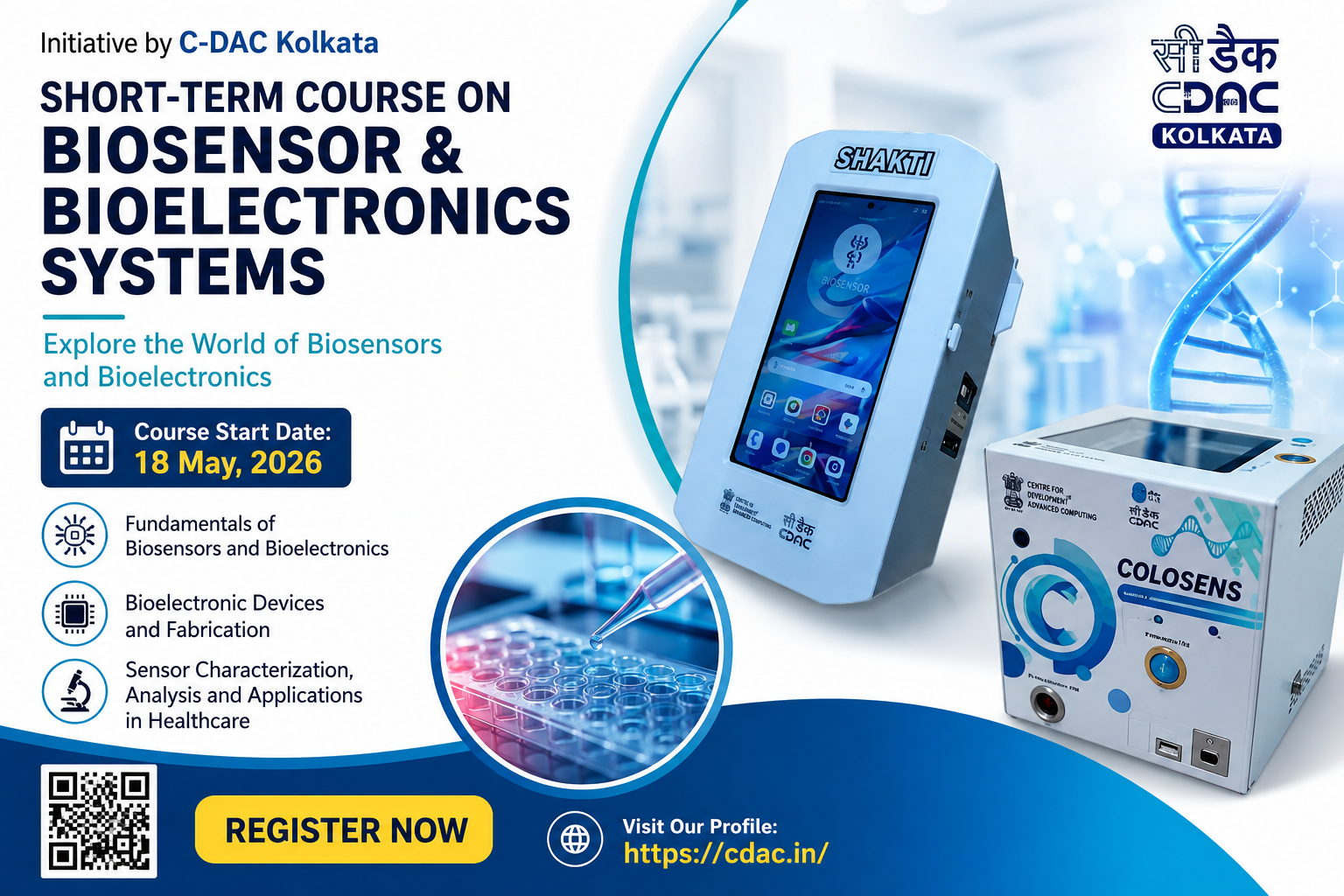
India’s growing biotechnology, healthcare technology, and electronics sectors are creating strong demand for professionals skilled in biosensors, bioelectronics, and interdisciplinary healthcare innovation. Responding to this emerging technology trend, the Centre for Development of Advanced Computing (C-DAC) Kolkata has announced a specialized short-term online course on “Biosensor & Bioelectronics Systems.”
The program is designed for students, researchers, faculty members, industry professionals, and technology enthusiasts interested in understanding modern biosensor technologies, biomedical electronics, and healthcare innovation systems.
What is the C-DAC Biosensor & Bioelectronics Systems Course?
The newly announced course by C-DAC Kolkata focuses on practical and theoretical learning related to biosensors and bioelectronics technologies. The initiative aims to help learners gain exposure to emerging scientific and engineering applications used in healthcare diagnostics, biomedical devices, sensor technology, and smart medical systems.
According to the publicly shared program information, the course includes:
- Fundamentals of Biosensors and Bioelectronics
- Bioelectronic Devices and Fabrication
- Sensor Characterization and Analysis
- Healthcare Applications of Biosensors
- Interdisciplinary Technology Learning
- Practical Insights from Experts
The course is expected to provide learners with industry-relevant understanding of modern biosensor technologies and biomedical systems.
Course Start Date and Learning Format
Program Details
- Course Name: Biosensor & Bioelectronics Systems
- Organizer: C-DAC Kolkata
- Course Type: Short-Term Online Course
- Start Date: 18 May 2026
- Mode: Online Learning Program
The course has been promoted as an accessible learning opportunity for individuals looking to enhance their technical knowledge in emerging biotechnology and electronics domains.
Why Biosensors and Bioelectronics Are Important in 2026
Rapid Growth of Healthcare Technology
The healthcare and biotechnology sectors are increasingly integrating advanced electronic systems, AI-driven diagnostics, and sensor-based monitoring technologies.
Biosensors are now widely used in:
- Medical Diagnostics
- Disease Detection
- Wearable Health Devices
- Smart Healthcare Monitoring
- Laboratory Research
- Environmental Monitoring
- Food Safety Testing
- Point-of-Care Devices
As healthcare technology evolves, biosensors and bioelectronics are becoming critical components in digital healthcare ecosystems.
Understanding Biosensors and Bioelectronics
What Are Biosensors?
Biosensors are analytical devices that combine biological components with electronic systems to detect chemical, biological, or physical processes.
These systems can help identify:
- Glucose Levels
- Biomarkers
- Pathogens
- Environmental Pollutants
- Health Conditions
- Biological Reactions
Modern biosensors are increasingly integrated with AI, IoT, and cloud-based monitoring platforms.
What is Bioelectronics?
Bioelectronics combines biology, electronics, and engineering to develop systems that interact with biological processes.
Applications include:
- Medical Implants
- Neural Interfaces
- Smart Diagnostic Systems
- Electronic Health Monitoring
- Biomedical Instrumentation
- Digital Therapeutics
The integration of electronics with healthcare systems is creating major innovation opportunities across the global health technology industry.
India’s Growing Focus on Biotechnology and Healthcare Innovation
India is rapidly expanding its investments in:
- Biotechnology Research
- Medical Electronics
- AI Healthcare Systems
- Digital Diagnostics
- Biomedical Engineering
- Smart Medical Devices
- STEM Education
- Innovation-Based Learning
Government-backed organizations like C-DAC are increasingly supporting technology education programs that align with future industry requirements.
Benefits for Students and Researchers
Programs like the C-DAC Kolkata Biosensor & Bioelectronics Systems course can help participants:
- Gain interdisciplinary technical knowledge
- Explore healthcare technology innovation
- Understand sensor fabrication techniques
- Learn biomedical device applications
- Improve research and academic skills
- Enhance career opportunities in biotech and electronics sectors
The course may especially benefit students pursuing biotechnology, biomedical engineering, electronics, healthcare technology, AI in healthcare, and applied sciences.
Future Scope of Biosensor Technologies
The global biosensor market is expected to continue expanding due to increasing adoption in:
- Smart Hospitals
- Personalized Medicine
- AI Diagnostics
- Remote Healthcare Monitoring
- Industrial Biotechnology
- Precision Healthcare
- Wearable Technology
- Medical Robotics
Emerging technologies such as AI-powered diagnostics, digital health platforms, and connected medical devices are further accelerating demand for biosensor expertise.
Keywords Focused in This Article
- C-DAC Kolkata
- Biosensor Course 2026
- Bioelectronics Systems
- Biotechnology Training
- Healthcare Technology Course
- Biomedical Electronics
- Biosensor Applications
- STEM Education India
- Online Biotechnology Course
- Sensor Technology Learning
- Healthcare Innovation
- Bioelectronics Training Program
- Medical Device Technology
- Research and Innovation
Conclusion
The C-DAC Kolkata short-term course on Biosensor & Bioelectronics Systems highlights the growing importance of interdisciplinary learning in biotechnology, electronics, healthcare innovation, and advanced research.
As biosensors and bioelectronics continue transforming healthcare and diagnostics worldwide, educational programs like this can help students, researchers, and professionals build future-ready technical skills for emerging industries.
The initiative also reflects India’s increasing focus on advanced technology education, biomedical innovation, and research-driven skill development.
This information is based on publicly available promotional content and course-related information.