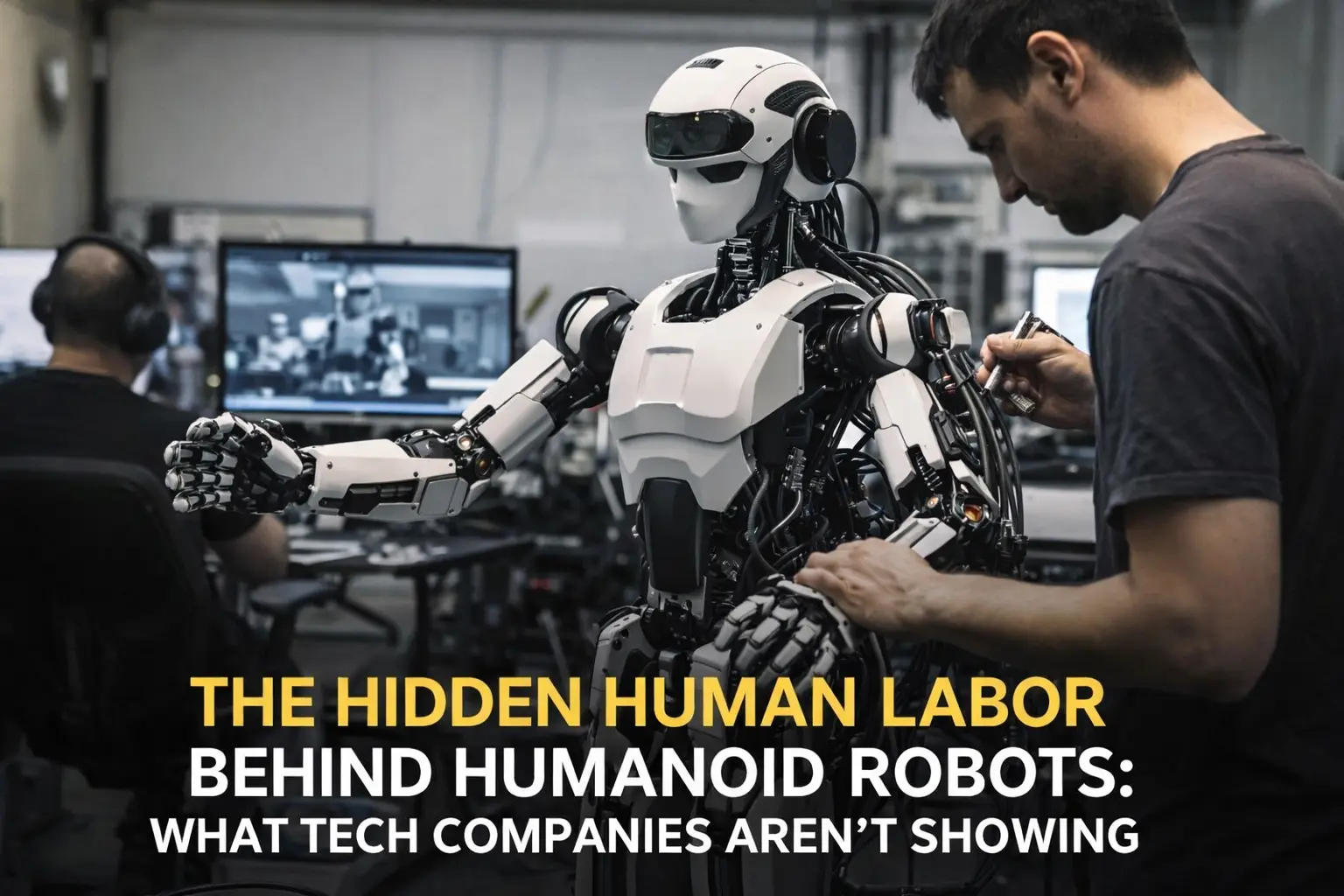
The Hidden Human Labor Behind Humanoid Robots: What Tech Companies Aren’t Showing
Humanoid robots are often portrayed as autonomous, intelligent machines capable of performing complex tasks without direct human input. However, recent reporting based on insights from MIT Technology Review reveals that much of the “intelligence” behind these robots depends on extensive human labor behind the scenes — labor that is rarely visible to the public or end users. :contentReference[oaicite:1]{index=1}
From collecting training data to supervising remote operations, a significant portion of the work that enables humanoid robots to function involves human effort. This article explores how humanoid robot development still heavily relies on human participation, why this matters, and how it can influence the future of automation and workforce perception in the age of AI.
Humanoid Robots: Not As Autonomous As They Appear
Humanoid robots are designed to mimic human movements and behaviors, often with the promise of someday assisting in homes, factories, and public spaces. Companies developing these robots frequently showcase them walking, grasping objects, or navigating environments, giving the impression of seamless autonomy.
However, behind the sleek demos and promotional videos, much of the actual functionality depends on human input during development and real-time operation — a fact that is generally underreported in mainstream narratives. :contentReference[oaicite:2]{index=2}
The Hidden Human Workforce in Robot Training
One of the most surprising revelations is the scale of human labor required to train humanoid robots. Workers often spend long hours performing repetitive tasks — such as opening and closing doors, moving objects, or demonstrating correct postures — while wearing sensors, VR systems, or exoskeleton devices.
These human demonstrations generate critical training data that robots use to learn how to perform similar tasks. Instead of being purely autonomous, many humanoid robots today are learning by imitating detailed human actions captured through extensive data collection efforts. :contentReference[oaicite:3]{index=3}
In one example, a person in Shanghai reportedly spent an entire week performing a single repetitive motion so that robots could learn how to execute that task autonomously. Machines need this sort of high-quality human-generated data to refine their perception, movement, and decision-making systems.
Teleoperation: When Humans Still Drive Robots
Another surprising aspect of humanoid robot operation is teleoperation — a method where a remote human operator controls a robot’s movements and decisions. Even robots marketed as autonomous may rely on human supervisors to take over when they encounter complex tasks or unfamiliar environments.
For example, certain consumer humanoid robots slated to ship to customers this year reportedly include remote operators who assist when the robot gets stuck or confused, accessing robot cameras and sensors to manually guide actions — further highlighting the dependence on human intervention. :contentReference[oaicite:4]{index=4}
Data Collection Partnerships and Human Input at Scale
Some robotics companies are partnering with other organisations to collect real-world movement data across thousands of homes and environments. This data is used to improve the robot’s ability to handle a wide variety of physical scenarios.
For instance, collaborations between robotics firms and property groups have involved gathering detailed movement patterns to train robots across diverse living spaces. While such data can improve robot performance, it also raises questions about privacy and ethical data usage when scaled to thousands of households. :contentReference[oaicite:5]{index=5}
Why This Hidden Labor Matters
Understanding the human work behind humanoid robots is crucial for several reasons:
- Transparency: Tech companies should clearly communicate the role of human labor in robot training and operation to manage public expectations.
- Ethics: Workers performing training tasks may face repetitive strain or lack proper recognition and compensation for their contributions.
- Workforce Impact: Realising how much human effort remains necessary challenges narratives that robots will replace humans entirely in the near future.
- Privacy and Consent: Collecting movement data from real homes or workplaces raises concerns about data security and consent when scaled across populations.
Misconceptions About Autonomy in Robotics
The public perception of humanoid robots is often shaped by marketing and demos showcasing impressive controlled scenarios. However, the reality is that current robotics technology remains a hybrid of machine capability and human involvement.
While artificial intelligence and machine learning algorithms are rapidly advancing, they still rely on human-generated training data and operators to navigate unpredictable real-world contexts. This means that “autonomy” remains partially mythologised until robots can safely and reliably function without ongoing human support.
Where Robotics Is Heading
Despite the hidden human labor, the robotics field continues to make rapid progress. As AI models become more sophisticated and data collection techniques improve, robots may eventually reduce their reliance on human trainers for basic tasks.
At the same time, true autonomy — where robots can wholly understand and react to complex environments without human intervention — remains a long-term goal rather than a current reality. Continued breakthroughs in perception, reasoning, manipulation, and adaptive intelligence will be necessary before humanoid robots can achieve full independence.
The Future of Work in an AI-Driven World
The growing role of humanoid robots in industry and daily life triggers important questions about the future of work. While some fear widespread job displacement, the hidden labor behind robotics suggests a more nuanced transition where humans and machines will continue to collaborate for years to come.
Jobs that involve training, supervising, and collaborating with robots are likely to emerge alongside roles in data management, safety assurance, and robotics ethics compliance. Preparing the workforce for this shift will require updated education, training programs, and policies that recognise the ongoing human role in automation.
Conclusion
Humanoid robots capture public imagination with promises of autonomy and futuristic utility. However, the human work required to make these machines function — from data generation to teleoperation — reveals a more complicated present reality in robotics development.
By acknowledging and understanding the hidden labor behind humanoid robots, societies can better prepare for the ethical, economic, and social implications of increased automation. Transparency and ethical practices in robotics development will be essential as this technology continues to evolve and become more integrated into daily life.
Source: Based on reporting and summaries of the MIT Technology Review article “The human work behind humanoid robots is being hidden” and related analysis. :contentReference[oaicite:6]{index=6}